Education
High-Quality H2O From Source to Tap
Central Alabama Water’s system starts with the collection of water from local rivers and lakes. From there, it’s cleaned, treated and tested before being delivered to homes and businesses.

Passionate About Water. Passionate About You.
When our customers turn on the tap, they can count on their water being purified, monitored and tested to protect their health and safety. Your water’s journey begins in the Warrior and Cahaba rivers and ends with clean, great-tasting water that comes out of your faucet. As the largest drinking water provider in Alabama, Central Alabama Water provides service to hundreds of thousands of people throughout its five-county service area.
Jump To Section
Water Quality You Can Trust
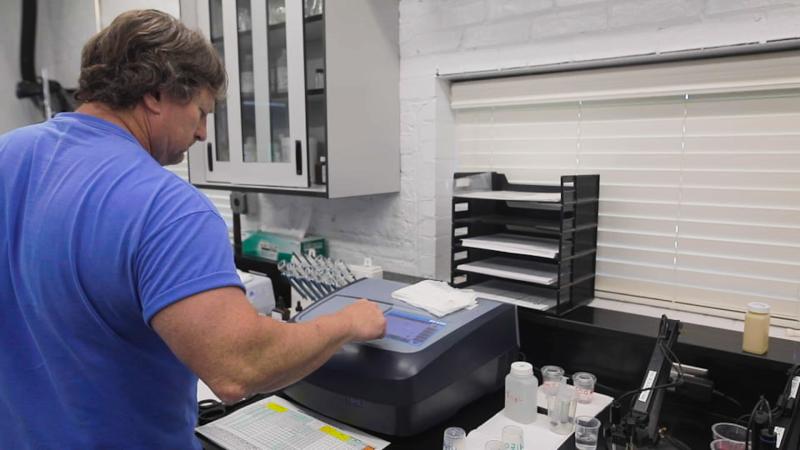
Every day, Central Alabama Water conducts hundreds of tests in its EnviroLab. The lab is certified by the Alabama Department of Environmental Management (ADEM) and the Environmental Protection Agency (EPA). Our scientists and technicians perform approximately 62,800 tests each year to ensure the quality and safety of our drinking water.
Our Annual Water Quality Report informs our customers about their water and shows the results of our testing. The report is prepared in accordance with the EPA’s rules and guidelines. The drinking water we provide meets or exceeds all EPA water quality standards.
How Water Is Treated
Water treatment is a very involved process.
Central Alabama Water has four water treatment facilities: Carson, Putnam, Shades Mountain and Western Filter Plants. Combined, these filter plants deliver an average of 110 million gallons of water each day to customers across five counties.
Here’s how it works:
- Intake: Water is taken from the source. Logs, fish and plants are screened out, and water is drawn into the treatment plant.
- Chemical Addition: Chemicals are added to the water to kill germs and improve taste and odor.
- Mixing: Water and chemicals are rapidly mixed.
- Coagulation and Flocculation: Any particles present stick together and form larger particles called flocculants or “floc.”
- Sedimentation: The water and floc particles flow into a sedimentation basin. The floc then settles to the bottom and is removed from the water.
- Filtration: Water flows through filters. The filters are made of layers of sand and gravel.
- Disinfection: A small amount of chlorine is added to kill any remaining germs, keeping the water safe as it travels to homes and businesses.
- Storage: Water is placed in a closed tank or clearwell.
- Distribution: Water is transported to homes and businesses.
Where Your Water Comes From
Good source water is the result of Central Alabama Water’s environmental protection policy. Our Watershed Protection Policy limits development in areas close to our water sources. Watersheds are areas of land where water that drains off runs into a river, stream or lake. Keeping these watersheds pristine means our source water is high-quality. We focus on purchasing land to increase our watershed so that we can protect our source water and decrease the amount of treatment required.
Central Alabama Water gets water for its customers from several surface water sources. Our pump stations deliver this water for treatment to our four filter plants:
- Carson Filter Plant is served by Inland Lake or the Sipsey Fork of the Warrior River.
- Putnam Filter Plant is served by Inland Lake and the Sipsey and Mulberry Forks of the Warrior River.
- Shades Mountain Filter Plant is served by the Cahaba River and the Lake Purdy Reservoir.
- Western Filter Plant is served by the Sipsey and Mulberry Forks of the Warrior River.
Ongoing Improvements
We are always looking for new ways to improve our systems and facilities. Central Alabama Water’s system of pipes, pump stations, filter plants and reservoirs cover more than 759 square miles. The CAW has more than 4,100 miles of water mains (pipes) in its distribution network. Our crews regularly replace pipes and build new facilities to improve our service.
The Impact of Lead and Water
There is no lead in the drinking water Central Alabama Water provides to your home or business. Nevertheless, lead can come from household plumbing, such as brass fixtures containing lead or lead solder. There is no safe level of lead exposure, and the health effects caused by lead can include irreversible damage to the brain and nervous system, particularly in young children and babies. There are simple steps you can take to reduce exposure to lead in your home.